
A blood pressure chart or log helps document values clearly over several days or weeks. In addition to systolic and diastolic values, pulse, time and special events can be recorded.
What is a blood pressure chart?
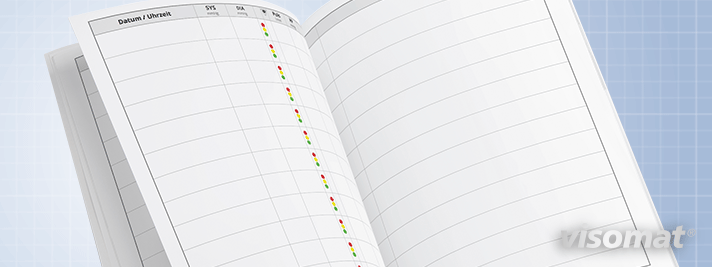
A blood pressure chart is a simple overview for date, time, systolic value, diastolic value and pulse. Additional notes about stress, exercise, sleep or medication make values easier to explain.
Fill in a blood pressure chart
Date and time
Record when you measured.
SYS and DIA
Document the upper and lower blood pressure values.
Pulse
Also record your pulse.
Notes
Briefly note any special circumstances.
Evaluate blood pressure values
Look for recurring patterns rather than single outliers. Repeatedly high or very low values should be discussed with a medical professional.
| Category | Systolic | Diastolic |
|---|---|---|
| Low blood pressure | below 100 or 110 mmHg | below 60 mmHg |
| Normal blood pressure | 100 or 110 to 129 mmHg | 60 to 84 mmHg |
| High-normal blood pressure | 130 to 139 mmHg | 85 to 89 mmHg |
| High blood pressure | from 140 mmHg | from 90 mmHg |
Printable blood pressure chart
Tip
Keep the chart next to the blood pressure monitor and take it with you to medical appointments.